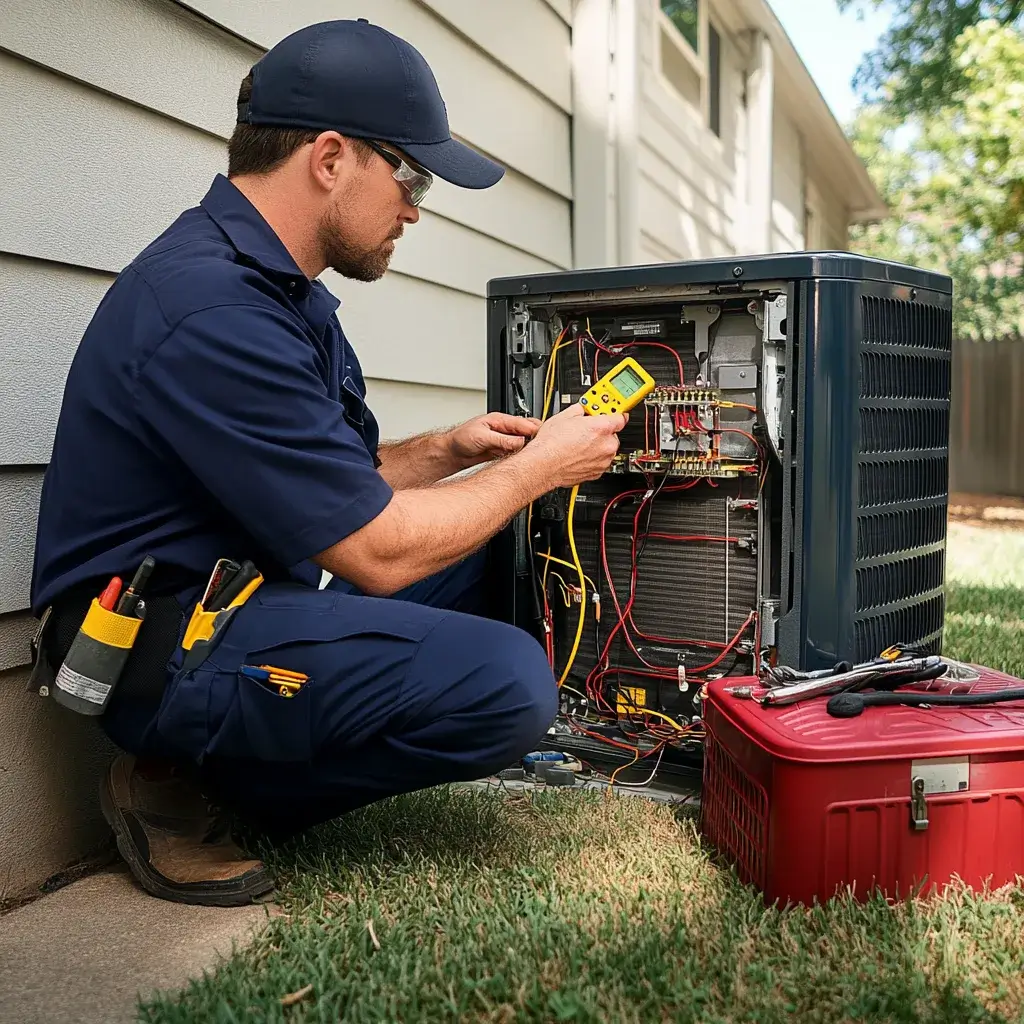
Replacing your furnace in Pennsylvania typically costs between $5,000 and $10,000, with most homeowners paying around $7,000 for a standard installation. High-efficiency models with advanced features or installations requiring significant modifications can reach $15,000 or more. These figures include the furnace unit, professional installation, necessary permits, and removal of your old system.
The specific price you’ll pay depends on factors like furnace type, size, efficiency rating, and installation complexity. After performing thousands of installations across Pennsylvania, we’ve found that investing in mid-range to high-efficiency furnaces (90-96% AFUE) typically delivers the best long-term value when considering both upfront costs and energy savings.
Why Furnace Replacement Costs Matter in Pennsylvania
Pennsylvania winters demand reliable heating systems that can handle extended sub-freezing temperatures. When your furnace fails during a January cold snap, understanding replacement costs becomes critically important – both for your immediate budget and your long-term comfort.
Unlike warmer regions where heating system selection might be an afterthought, Pennsylvania homeowners face 5,500+ annual heating hours – meaning your furnace runs nearly 60% of the year. This intensive operation makes proper system sizing, efficiency selection, and installation quality especially important factors that directly impact both your upfront costs and monthly energy bills.
The financial equation is further complicated by Pennsylvania’s energy market dynamics. Natural gas prices have fluctuated significantly in recent years, while electricity rates continue their upward trend. These fuel cost variations can dramatically shift the lifetime operating costs of different furnace types, making today’s smart choice potentially tomorrow’s budget burden.
At RegionServiceCo, we’ve found that homeowners who understand the complete replacement cost picture make better long-term decisions. The furnace market has evolved dramatically in recent years with high-efficiency options, smart controls, and unprecedented rebate opportunities. Federal tax credits now offer up to $3,200 annually for qualifying energy-efficient upgrades, while Pennsylvania utilities provide additional rebates that can reduce upfront costs by $400-$1,200 depending on your provider and selected equipment.
Furnace Replacement Cost at a Glance
The table below provides a quick overview of current furnace replacement costs in Pennsylvania compared to national averages:
| Furnace Category | Pennsylvania Cost Range | Typical PA Installation | National Average Range |
|---|
| Standard Efficiency | $5,000-$7,500 | $6,300 | $4,820-$7,500 |
| High Efficiency | $7,000-$10,000 | $8,200 | $5,500-$9,350 |
| Premium Systems | $10,000-$15,000+ | $12,500 | $9,000-$14,000 |
These ranges reflect complete installation costs for properly sized systems installed by licensed professionals with appropriate permits. Based on our installation data across southeastern Pennsylvania, most homeowners select mid-range, high-efficiency gas furnaces in the $7,000-$8,500 category, which typically delivers the optimal balance between upfront cost and long-term energy savings.
It’s worth noting that Pennsylvania costs trend approximately 10-15% higher than national averages due to several factors:
- Stricter local code requirements for heating systems
- Higher regional labor costs for qualified HVAC technicians
- Greater demand for high-capacity systems due to our climate
- More complex installations to accommodate older homes and buildings
While DIY installation or hiring unlicensed contractors might initially appear less expensive, these approaches often lead to code violations, efficiency losses up to 30%, voided warranties, and safety concerns that ultimately cost more to correct. Professional installation typically accounts for 40-50% of the total replacement cost but ensures your system delivers its rated efficiency and longevity.
Understanding Furnace Costs By System Type
Pennsylvania homeowners have multiple heating options, each with distinct price points and performance characteristics. Your existing fuel source often determines the most economical choice, but fuel conversion sometimes makes financial sense when long-term operational savings offset higher upfront costs.
| Furnace Type | Average PA Installed Cost | National Range | Typical Payback Period |
|---|
| Natural Gas | $5,500-$8,500 | $2,000-$5,200 | 5-8 years |
| Propane | $5,200-$7,800 | $2,200-$5,700 | 6-9 years |
| Oil | $6,000-$9,000 | $2,500-$6,000 | 7-10 years |
| Electric | $4,500-$7,500 | $1,900-$5,600 | 8-12 years |
Natural Gas Furnaces
Pennsylvania Perspective: Natural gas remains the most popular heating choice throughout Pennsylvania, with approximately 51% of homes using this fuel source. Modern gas furnaces achieve up to 98.5% AFUE (Annual Fuel Utilization Efficiency), meaning almost all fuel energy converts to usable heat.
Advantages: Lower operational costs than electric, oil, or propane; excellent heating performance in extreme cold; minimal maintenance requirements; Pennsylvania gas infrastructure is generally reliable.
Drawbacks: Installation requires proper venting and gas line connections; higher upfront costs than electric; limited availability in some rural areas.
Propane Furnaces
Pennsylvania Perspective: Popular in rural Pennsylvania areas without natural gas service, propane provides performance similar to natural gas but requires on-site storage tanks.
Advantages: Nearly identical equipment to natural gas furnaces; excellent cold-weather performance; can power other household appliances; no dependency on utility infrastructure.
Drawbacks: Fuel price volatility; tank rental or purchase costs; regular delivery requirements; higher per-BTU cost than natural gas in most Pennsylvania markets.
Oil Furnaces
Pennsylvania Perspective: Historically common in northeastern Pennsylvania and older homes, oil furnaces represent about 14% of Pennsylvania heating systems but are steadily declining as homeowners convert to alternatives.
Advantages: Good heat output for older, less-insulated homes; can operate without electricity; typically long-lasting equipment.
Drawbacks: Higher maintenance requirements; lower efficiency ratings (maximum 86% AFUE); fuel storage requirements; more frequent cleaning needs; higher pollution and carbon footprint.
Electric Furnaces
Pennsylvania Perspective: Less common as standalone systems but increasingly popular when paired with heat pumps in dual-fuel arrangements. Electric furnaces have the lowest installation costs but highest operational expenses in Pennsylvania’s climate.
Advantages: No combustion or venting requirements; simplest installation; zero carbon emissions at the source; minimal maintenance needs; longest average lifespan (20-30 years).
Drawbacks: Significantly higher operational costs in Pennsylvania’s climate; limited heat output during extreme cold; places heavy demand on household electrical system; may require electrical service upgrades.
At RegionServiceCo, we’ve observed a steady migration toward high-efficiency gas systems, with dual-fuel heat pump combinations becoming increasingly popular for their exceptional efficiency and operational flexibility.
What’s Actually Included in Furnace Replacement Costs
Understanding the components of your furnace replacement cost helps you evaluate quotes more effectively. Here’s what should be included in a professional furnace replacement:
Equipment Costs ($1,800–$5,500)
The furnace unit itself typically represents 40-50% of your total project cost. This component varies significantly based on:
- Basic models: $1,800-$2,500 (80-85% AFUE)
- Mid-range models: $2,500-$3,500 (90-93% AFUE)
- Premium models: $3,500-$5,500+ (95-98.5% AFUE)
Higher-efficiency units cost more upfront but deliver substantial operational savings—approximately $200-350 annually for every 10% AFUE improvement in a typical Pennsylvania home.
Professional Installation Labor ($2,000–$4,000)
Installation costs reflect the technical complexity and time requirements of your specific project. This includes:
- System removal and disposal: $300-$500
- New system positioning and mounting: $400-$800
- Electrical connections and control wiring: $200-$600
- Fuel line connections and testing: $300-$700
- Venting system installation/modification: $400-$1,000
- System startup, calibration, and testing: $400-$700
Pennsylvania code requirements necessitate multiple safety checks, pressure testing, and performance verification, which adds approximately 10-15% to labor costs compared to states with less rigorous regulations.
Required Permits and Inspections ($75–$250)
Pennsylvania municipalities require permits for furnace replacements to ensure safety and code compliance. These costs vary by location:
- Philadelphia area: $150-$250
- Pittsburgh area: $100-$200
- Suburban/rural areas: $75-$150
Professional installers typically handle the permitting process, schedule inspections, and ensure all documentation is properly filed.
Additional Components and Modifications
Many furnace replacements require complementary upgrades or modifications:
- Ductwork modifications: $500-$2,000 (often necessary to accommodate higher-efficiency systems)
- Condensate drainage systems: $200-$500 (required for high-efficiency condensing furnaces)
- Venting upgrades: $300-$1,200 (modern systems often require different venting specifications)
- Smart thermostat installation: $250-$450 (optimizes performance and enables remote control)
- Air filtration upgrades: $200-$1,200 (improves indoor air quality and system efficiency)
At RegionServiceCo, our quotes include all necessary components and modifications with transparent line-item pricing. We find that approximately 60% of Pennsylvania furnace replacements require at least some ductwork modification to ensure optimal system performance.
Key Factors That Influence Your Final Price
Beyond the base equipment and standard installation costs, several factors can significantly impact your total furnace replacement investment:
System Size and Heating Capacity
Furnace sizing is measured in BTUs (British Thermal Units), with most Pennsylvania homes requiring between 60,000 and 120,000 BTUs. Properly sized systems cost more initially but prevent:
- Undersized units: Continuous operation, inability to maintain comfort, premature failure
- Oversized units: Short cycling, temperature swings, excessive wear, wasted energy
Each 20,000 BTU increase typically adds $600-$1,000 to equipment costs. At RegionServiceCo, we perform comprehensive Manual J load calculations rather than simple square footage estimates, ensuring your system is precisely matched to your home’s actual heating requirements.
Energy Efficiency Ratings
AFUE (Annual Fuel Utilization Efficiency) ratings directly impact both equipment cost and operational expenses:
- Standard efficiency (80-85% AFUE): Entry-level pricing, higher operating costs
- Mid-efficiency (90-93% AFUE): Moderate pricing, substantial energy savings
- High-efficiency (95-98.5% AFUE): Premium pricing, maximum energy savings
For context, upgrading from an older 70% AFUE system to a 96% AFUE model reduces fuel consumption by 27%—translating to approximately $450-$700 in annual savings for the average Pennsylvania home.
Brand and Model Selection
Major manufacturers (Carrier, Trane, Lennox, Rheem, Bryant) offer multiple product tiers:
- Builder-grade models: $1,800-$2,800 installed, 5-10 year warranties
- Mid-range models: $2,800-$4,500 installed, 10-year warranties
- Premium models: $4,500-$7,000+ installed, 12-20 year warranties with extended coverage options
Premium models typically include better warranties, advanced materials, enhanced controls, variable-speed technology, and superior comfort features. RegionServiceCo primarily installs mid-range and premium equipment, which has proven to deliver the best long-term value based on our 20+ years of installation and service data.
Home Layout and Accessibility
Installation complexity can significantly impact labor costs:
- Easy access installations (first floor, dedicated mechanical room): Standard pricing
- Difficult access (crawlspaces, attics, tight closets): +$400-$1,200
- Complex multi-level homes: +$600-$1,500 for extended ductwork runs
Older Pennsylvania homes often present unique challenges like narrow staircases, limited workspace, or unusual configurations that require specialized installation approaches and additional labor hours.
Seasonal Timing
Replacement costs fluctuate seasonally, with price variations of 10-25%:
- Peak season (November-February): Premium pricing, limited scheduling options
- Shoulder seasons (March-May, September-October): Standard pricing, better availability
- Off-peak (June-August): Potential discounts, immediate scheduling
Emergency replacements during extreme weather events typically incur rush fees of $200-$800 depending on severity and timing. Planning replacements during spring or fall provides both cost advantages and more flexibility in equipment selection.
Additional Factors
Other variables that influence total project cost include:
- Home age and construction: Older homes often require more extensive modifications
- Existing system type: Fuel conversions add $1,200-$4,000 for necessary infrastructure
- Local code requirements: Vary by municipality and may require additional components
- System zoning needs: Add $2,000-$4,500 for multi-zone capabilities
- Indoor air quality additions: Add $500-$2,500 for enhanced filtration or purification
Pennsylvania’s Regional Cost Variations and Considerations
Local Price Ranges Across Pennsylvania
Furnace replacement costs vary significantly throughout Pennsylvania’s diverse regions due to differences in local building codes, labor rates, and market dynamics:
| Region | Standard Efficiency | High Efficiency | Premium Systems |
|---|
| Philadelphia Metro | $5,500-$8,000 | $8,000-$12,000 | $12,000-$18,000 |
| Main Line Area | $5,200-$7,800 | $7,800-$11,500 | $11,500-$16,000 |
| Pittsburgh Region | $4,800-$7,200 | $7,200-$10,500 | $10,500-$15,000 |
| Harrisburg/Central PA | $4,500-$6,800 | $6,800-$9,800 | $9,800-$14,000 |
| Northeast PA | $4,600-$7,000 | $7,000-$10,000 | $10,000-$14,500 |
| Rural Counties | $4,200-$6,500 | $6,500-$9,500 | $9,500-$13,500 |
The price variations reflect several regional factors:
- Metropolitan areas: Higher labor costs but greater contractor competition
- Suburban regions: Balanced costs with good contractor availability
- Rural areas: Lower labor rates but increased travel charges and fewer contractor options
At RegionServiceCo, we maintain consistent pricing structures throughout our service area, with only minimal travel surcharges for locations beyond 30 miles from our service centers. This approach ensures all customers receive equitable pricing regardless of their specific location.
Current Pennsylvania Rebates and Incentives
Pennsylvania homeowners benefit from substantial financial incentives that can significantly offset furnace replacement costs:
Federal Tax Credits
The Inflation Reduction Act (IRA) provides generous tax credits through 2032:
- 30% of costs up to $2,000 for qualifying high-efficiency gas furnaces (95%+ AFUE)
- Additional $1,200 for related electrical upgrades or improvements
- Income-based rebates of up to $8,000 for certain low/moderate-income households
These credits apply to primary residences only and require manufacturer certifications documenting efficiency ratings.
Pennsylvania Utility Rebates
Major Pennsylvania utilities offer substantial rebates for qualifying equipment:
- PECO: $300-$500 for 95%+ AFUE gas furnaces
- FirstEnergy (Met-Ed, Penelec, Penn Power): $250-$400 for ENERGY STAR certified systems
- PPL Electric: $200-$350 for high-efficiency electric heating systems
- UGI Utilities: $450-$650 for 95%+ AFUE natural gas furnaces
Most utility programs require professional installation by licensed contractors and submission of proper documentation. At RegionServiceCo, we handle the entire rebate application process for our customers, ensuring maximum incentive capture with minimal paperwork hassle.
Local and Manufacturer Incentives
Additional savings opportunities include:
- Manufacturer rebates: Seasonal promotions offering $200-$1,500 on premium systems
- Local incentives: Some municipalities offer permit fee waivers for high-efficiency upgrades
- 0% financing options: Many manufacturers offer no-interest financing for 12-60 months
Combining these various incentives can reduce your net replacement cost by 20-30%, making high-efficiency systems much more accessible. We recommend exploring all available options before making your final equipment selection.
Pennsylvania Climate and Efficiency Considerations
Pennsylvania’s climate creates unique heating demands that directly impact furnace selection and long-term operational costs:
- Heating season length: 5-7 months depending on location
- Design temperatures: -5°F to 10°F (used for system sizing)
- Annual heating degree days: 5,200-6,800 (measure of heating demand)
These factors make efficiency particularly important for Pennsylvania homeowners. The typical Pennsylvania home uses 75-85% of its annual energy consumption for heating, making furnace efficiency the primary determinant of overall energy costs.
High-efficiency furnaces (95%+ AFUE) typically cost $1,000-$2,500 more than standard models but deliver substantial operational savings:
- Standard efficiency (80%): $1,650 average annual heating cost
- High efficiency (95%): $1,390 average annual heating cost
- Ultra-high efficiency (98%): $1,350 average annual heating cost
This creates typical payback periods of 4-7 years for high-efficiency upgrades, with remaining system life representing pure savings. For most Pennsylvania homes, selecting a 95-96% AFUE system provides the optimal balance between upfront investment and lifetime savings.
The Repair-Replace Decision: When to Upgrade
Financial Evaluation Framework
When facing significant furnace repairs, a structured decision process helps determine whether repair or replacement makes more economic sense:
- The 50% Rule: If repair costs exceed 50% of replacement, upgrading is typically more cost-effective
- The Age-Cost Formula: Multiply repair cost by system age in years—if the result exceeds equipment replacement cost, replace rather than repair
- Efficiency Upgrade Potential: Calculate energy savings from replacement—this may justify upgrade even with lower repair costs
Example: A $750 repair on a 13-year-old, 80% efficient furnace ($750 × 13 = $9,750) exceeds replacement cost of an entry-level 95% AFUE system, making replacement the better financial decision even before considering efficiency improvements.
At RegionServiceCo, we provide detailed repair-replace analyses that incorporate current equipment condition, estimated remaining lifespan, operational savings from efficiency improvements, and available incentives. This comprehensive approach ensures you have all necessary information for an informed decision.
Age-Based Considerations
Furnace lifespan varies by type, maintenance history, and usage patterns:
| Furnace Type | Expected Lifespan | Replace After | Warning Signs |
|---|
| Gas | 15-20 years | 15+ years | Rising fuel consumption, uneven heating |
| Oil | 15-25 years | 20+ years | Increased soot, burner inconsistency |
| Electric | 20-30 years | 20+ years | Heating element failures, control issues |
| Propane | 15-20 years | 15+ years | Ignition problems, efficiency decline |
While some systems may technically operate beyond these timeframes, they typically experience:
- Efficiency degradation: 15-30% below original ratings
- Component availability challenges: Parts becoming obsolete
- Rising maintenance costs: Increasing frequency of repairs
- Diminished comfort: Less consistent heating performance
- Safety concerns: Increased risk of heat exchanger cracks or combustion issues
Even without immediate failure, these factors make proactive replacement of aging systems the more economical choice for most homeowners. Pennsylvania’s harsh climate accelerates wear particularly on heat exchangers, blower motors, and control systems.
Securing an Accurate Furnace Replacement Estimate
The Critical Importance of In-Home Assessment
Online estimators and phone quotes cannot provide accurate furnace replacement costs due to the numerous home-specific variables involved. A professional in-home assessment ensures:
- Proper system sizing: Calculated from actual home characteristics rather than square footage estimates
- Evaluation of existing infrastructure: Ductwork, venting, electrical, and fuel lines
- Identification of potential complications: Access limitations, code compliance issues
- Home-specific recommendations: Options tailored to your specific comfort needs and budget
These assessments typically take 60-90 minutes and should be offered without cost or obligation. RegionServiceCo provides comprehensive assessments that include thermal imaging, duct leakage evaluation, and detailed efficiency analysis to ensure our recommendations address your specific situation.
Critical Questions to Ask Your Contractor
When reviewing furnace replacement proposals, ask these essential questions:
- Is the system properly sized? Request documentation of load calculation methods
- What efficiency level is recommended and why? Get specific payback analysis
- What is included/excluded from the quote? Verify permits, disposal, all materials
- What warranties are provided? Check both manufacturer and labor coverages
- How are rebates and incentives handled? Clarify application process and timing
- What is the installation process? Understand timeline, crew size, and protection measures
- What maintenance is required? Get specific recommendations for ongoing care
Beware of contractors who:
- Provide quotes without visiting your home
- Recommend systems based solely on square footage
- Offer unusually low prices (often excluding critical components)
- Pressure you toward immediate decisions
- Cannot provide proper licensing and insurance documentation
At RegionServiceCo, our transparent proposal process includes detailed line-item pricing, comprehensive warranty information, and clear expectations for the entire replacement process from selection through final inspection.
Making Your Furnace Replacement Decision
Furnace replacement represents a significant investment in your home’s comfort, efficiency, and value. While basic systems offer lower upfront costs, mid-range and premium options typically deliver superior lifetime value through:
- Reduced energy consumption: 10-30% lower operating costs
- Enhanced comfort: More consistent temperatures and quieter operation
- Extended durability: Longer component life and better warranties
- Improved air quality: Better filtration options and humidity control
- Greater reliability: Reduced breakdown risk during extreme weather
For most Pennsylvania homes, investing in quality installation of efficiently sized, high-efficiency equipment provides the best long-term return. The ideal system balances initial investment against 15+ years of operational costs and comfort benefits.
RegionServiceCo: Your Trusted Furnace Replacement Partner
With over two decades of experience providing furnace replacements throughout Pennsylvania, RegionServiceCo delivers transparent pricing, expert installation, and exceptional follow-through. Our process includes:
- Comprehensive assessment: Detailed evaluation of your home’s specific heating needs
- Clear, detailed proposals: Line-item pricing with no hidden costs
- Quality installation: Factory-trained technicians following manufacturer specifications
- Rebate processing: Complete handling of all applicable incentive applications
- Extended warranties: Industry-leading coverage on both equipment and labor
- Ongoing support: Scheduled maintenance and priority service
Contact us today at 215-639-0424 or visit contact to schedule your no-obligation furnace assessment. Our experienced comfort consultants will help you navigate your replacement options, understand available incentives, and select the ideal system for your specific needs and budget.



 16 Mar 2026