Did you upgrade your HVAC system in 2025? You may be eligible for significant federal tax credits, including on qualifying HVAC installations like heat pumps, central air conditioners, furnaces, and more.
At Region Home Services, we want you to feel informed and confident when pursuing energy-efficient upgrades and claiming your tax incentives.
What Are HVAC Tax Credits & How Do They Work?
For the 2025 tax year, homeowners can qualify for the Energy Efficient Home Improvement Credit which is a dollar-for-dollar reduction in federal income tax, available by installing eligible energy-efficient equipment in their primary residence and claiming it on IRS Form 5695.
Here’s how it works:
1. Eligible Equipment
To qualify, your HVAC system must meet specific efficiency requirements set by the IRS and energy certification standards. Common qualifying systems include:
- Heat pumps (electric or natural gas)
- Central air conditioners
- High-efficiency furnaces
- Certain water heaters
- Other systems designed to improve energy performance in your home
Reminder: Equipment must be installed and operational in your home by December 31, 2025 to be eligible.
How Much Can You Save? 2025 Tax Credit Highlights
The federal tax credit covers 30 % of qualifying costs, including both equipment and installation – up to annual caps per category:
| Tax Credit Category | Maximum Credit (2025) |
| Qualified heat pumps & heat pump water heaters | Up to $2,000 |
| Central air conditioners | Up to $600 |
| Gas, propane, or oil furnaces | Up to $600 |
| Water heaters | Up to $600 |
These credits are nonrefundable, which means they can reduce your tax bill to zero, but won’t generate a refund if the credit exceeds your tax liability.
Follow these steps when filing your 2025 taxes:
Step 1: Confirm Eligibility
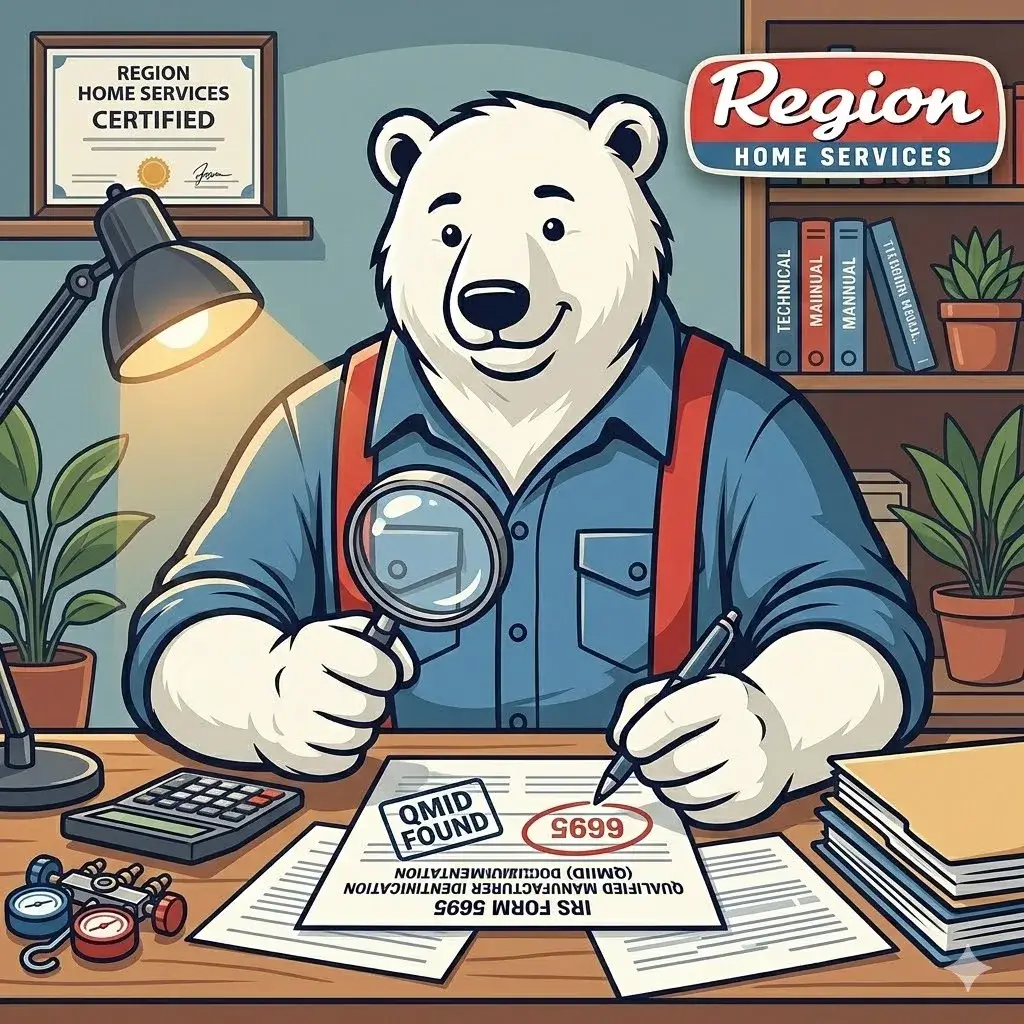
Ensure your HVAC equipment meets the IRS requirements, including energy efficiency ranking and manufacturer listing. Most qualifying products are ENERGY STAR® certified and must include a valid Qualified Manufacturer Identification Number (QMID) on the tax return for 2025 credits.
Step 2: Installation
Your new system must be installed and paid for by December 31, 2025. For example, if Region Home Services installs a high-efficiency heat pump in your Bensalem home, that qualifies if the system meets IRS guidelines.
Learn more or schedule a heater installation with Region Home Services:
Step 3: Keep All Documents
Save:
- Your invoice
- Installation receipts
- The QMID for each qualifying item
These documents aren’t filed with your return but are critical if the IRS requests proof.
When filing your 2025 taxes (usually in early 2025), complete IRS Form 5695 – Residential Energy Credits, specifically Part II: Energy Efficient Home Improvement Credit. This is where you’ll report qualified HVAC expenses and calculate the credit you’re claiming.
Step 5: File With Your Tax Return
Include the completed Form 5695 with your federal tax return when you file. If you’re using tax preparation software or a CPA, they’ll guide you where to input this information.
Don’t Miss Out — Act While Incentives Are Available!
Because these tax incentives expire after December 31, 2025, it’s smart to plan your upgrades soon to ensure you can take full advantage of the savings.
Ready to upgrade or replace your HVAC system and maximize your tax credit potential?
Have Questions? We’re Here to Help
At Region Home Services, our team understands HVAC tech and how to help homeowners navigate federal tax incentives like the 2025 Energy Efficient Home Improvement Credit. That’s why we’ve created this easy-to-reference guide to help you with claiming your tax credit.
Contact us now for all your HVAC needs!
2025 HVAC Tax Credit FAQs
1. What HVAC systems qualify for the 2025 federal tax credit?
Qualifying HVAC systems for 2025 include Energy Star–rated heat pumps, central air conditioners, gas furnaces, and heat pump water heaters that meet IRS efficiency standards.
2. How much is the HVAC tax credit for 2025?
Homeowners can claim 30% of qualified HVAC installation costs, up to $2,000 for heat pumps and up to $600 for central AC units or furnaces on their 2025 tax return.
IRS Form 5695 is used to claim the Residential Energy Credits, including the Energy Efficient Home Improvement Credit, when filing your federal tax return.
4. Does my HVAC system have to be installed by a certain date to qualify?
Yes. The HVAC system must be installed, paid for (or financed), and operational in your primary residence by December 31, 2025 to qualify for the tax credit.
5. What documentation do I need to claim an HVAC tax credit?
You’ll need your installation invoice, receipts, and the Qualified Manufacturer Identification Number (QMID) for the equipment.
6. Are HVAC tax credits refundable if they exceed my tax liability?
No. HVAC tax credits are nonrefundable, meaning they can reduce your tax bill to zero but won’t result in a refund for any remaining amount.
7. Can I claim HVAC tax credits if I replace an older system?
Yes. Replacing an older HVAC system with a qualifying energy-efficient unit may make you eligible for the 2025 HVAC tax credit, provided all IRS requirements are met.


 16 Mar 2026