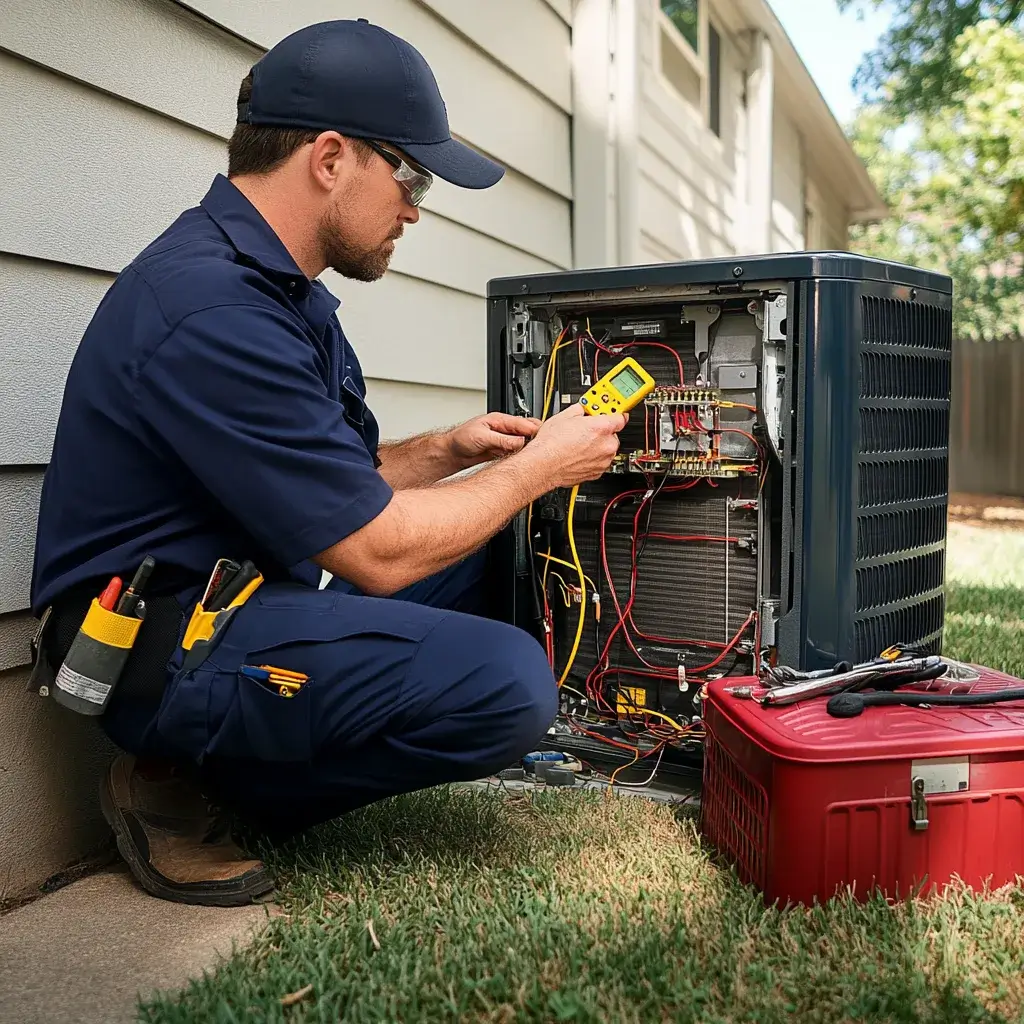
What are the signs of an outdoor AC unit problem? When your outdoor AC unit fails to start, you may notice warm air blowing inside, silence from the condenser fan, or breakers tripping after storms. In Bensalem’s hot, humid summers, this often leads to indoor temperatures rising 10–15°F above the thermostat setting. Left unresolved, the system works harder, driving up energy bills by 20–40% and risking costly component damage such as compressor failure.
Can I repair it myself? Only for very basic issues. Homeowners can safely reset a tripped breaker, replace thermostat batteries, or clear debris blocking airflow. These checks are low-risk and often resolve the issue in minutes.
How much will it cost (DIY vs professional)?
- DIY: Free to $50 for simple fixes like batteries or filters
- Professional service: $122–$1,041 in Bensalem on average, depending on parts and labor
How long will it take? DIY: 5–30 minutes for simple checks, though unresolved problems may drag on for days
DIY Repair vs. Professional Services
| Criteria | DIY Repair (Basic Checks) | Professional Service |
| Cost | Free–$50 (batteries, filter, cleaning supplies) | $122–$1,041 (diagnostics + repair with parts/labor) |
| Tools needed | Screwdriver, garden hose, batteries | Specialized tools: multimeter, refrigerant gauges |
| Time required | 5–30 minutes | 2–4 hours average repair time |
| Complexity | Level 1–2 (simple checks, no technical skill) | Level 3–5 (electrical/refrigerant expertise needed) |
| Warranty | None | Labor + parts warranty from licensed contractors |
| Risks | Low (minor cuts, wasted time if misdiagnosed) | Minimal risk; certified pros handle high-voltage and refrigerant safely |
Verdict: DIY troubleshooting is fine for quick checks like breakers, thermostat settings, or debris removal. But if the unit still won’t power on, professional service is strongly recommended.
When Repair Becomes Essential
Your outdoor AC unit is the heart of your cooling system, responsible for moving heat out of your home and keeping indoor temperatures comfortable. When it fails to turn on, the entire HVAC system is compromised. Instead of steady, cool airflow, you may face hot, humid rooms, rising energy bills, and equipment strain that can lead to premature breakdown.
Outdoor AC failures are among the most common service calls during Bensalem’s humid summers, often making up 25–30% of emergency visits in peak season. Ignoring early signs such as breakers tripping, buzzing sounds, or warm air inside can quickly escalate into major damage like compressor failure, costing thousands to replace.
Understanding when a repair is unavoidable helps homeowners avoid wasted time with trial-and-error fixes. Addressing issues promptly not only restores comfort but also prevents further damage to other system components. In many cases, timely intervention saves $500–$1,500 in escalating repair costs and extends the life of your entire HVAC system.
Why Consider Outdoor AC Repair?
Aging Components Demand Attention
Most outdoor AC parts, like capacitors and contactors, have lifespans of only 5–10 years. After a decade of operation, even well-maintained systems begin to show wear that affects reliability. In Bensalem’s hot, humid climate, heat and moisture accelerate deterioration by 15–20%. That’s why professional inspections every spring are essential, especially if your unit is more than 8–10 years old or has had frequent minor issues.
Visible damage to the outdoor unit, such as bent fins, rodent-chewed wires, or storm debris inside the condenser, can stop the system from turning on. Loose or burned wiring connections cause shorts that trip breakers. Damaged capacitors or contactors prevent the compressor and fan from starting. Even small faults in these components can create significant cooling failures, often requiring professional replacement to restore safe operation.
If your outdoor unit struggles to start, cycles on and off frequently, or makes unusual buzzing and humming noises, these are clear indicators of stress. Such problems force your system to work harder, raising energy use by 20–30% and increasing monthly bills. In severe cases, this strain shortens compressor life by several years, turning a $200 repair into a $2,000 replacement. Recognizing these symptoms early prevents costly escalation.
Indoor Air Quality Concerns
When the outdoor unit fails, the indoor environment suffers too. A non-functioning condenser allows humidity to build up, often leaving indoor levels above 60%. This creates a breeding ground for mold, mildew, and dust mites, which aggravate allergies and respiratory conditions. Musty odors or clammy air are signs your outdoor unit isn’t properly removing moisture. Restoring function through timely repair not only improves comfort but also protects your family’s health.
Signs Your Outdoor AC Unit Needs Repair
Inconsistent Cooling and Temperature Control
One of the clearest signs your outdoor AC unit isn’t working properly is when indoor comfort becomes unreliable. Certain rooms may feel warm and humid, while others remain cooler, even though the thermostat is set correctly. Often, this happens because the condenser isn’t running, or it’s failing to push enough refrigerant through the system to maintain balance. Many homeowners assume the thermostat is at fault, but in reality, the outdoor unit often holds the answer. A healthy system should provide steady, even cooling throughout the home during the hottest summer days.
Unusual Noises During Operation
A properly functioning outdoor AC unit makes a consistent humming sound when running. If you hear buzzing, clicking, or grinding noises from the condenser, it’s a strong indicator of trouble. Buzzing often points to electrical issues like a failing capacitor, while clicking may signal a faulty contactor struggling to engage. Grinding or rattling sounds could mean loose fan blades or debris caught in the system. Ignoring these noises allows small issues to grow into costly repairs, such as a seized motor or compressor damage.
Rising Energy Bills and Poor Efficiency
Another common warning sign is an unexplained increase in energy bills. When the outdoor unit struggles to start or fails to run at full capacity, the indoor system compensates by running longer cycles. This adds 20–30% to energy usage and still leaves your home uncomfortable. If you notice your bills climbing while comfort decreases, your condenser may be overheating, clogged with debris, or suffering from an electrical failure. Early repairs can restore efficiency and prevent major system damage.
Indoor Humidity and Air Quality Issues
When the outdoor AC unit doesn’t turn on, moisture inside your home can quickly build up. Instead of staying around 45–50%, humidity levels may climb above 60%, creating a sticky, uncomfortable environment. High humidity promotes mold and mildew growth, leading to musty odors and allergy flare-ups. In some cases, you may even notice condensation on windows or damp spots around vents. Addressing outdoor unit issues promptly helps keep humidity under control, ensuring a healthier indoor environment for your family.
The AC Repair Process
Professional Assessment and Planning
Every successful AC repair starts with a thorough professional inspection. A technician will check the thermostat settings, electrical connections, and outdoor condenser components before running diagnostic tests. In Bensalem, this visit typically costs between $100 and $250, but it provides essential information about what’s preventing your system from starting.
Using specialized tools such as multimeters, refrigerant gauges, and thermal imaging cameras, professionals can pinpoint whether the problem lies with electrical parts like capacitors and contactors, or mechanical issues such as a seized fan motor or refrigerant leak. Accurate diagnosis prevents unnecessary part replacements and ensures the real issue is corrected the first time.
Safe Preparation and Initial Steps
Before repairs begin, technicians always shut off power at the breaker and outdoor disconnect to prevent electrical accidents. Safety measures include wearing insulated gloves, protective glasses, and using voltage-rated tools. For homes in Bucks County, where storms and flooding are common, pros also check for water intrusion around the condenser base, which can increase the risk of short circuits or corrosion.
This preparation step protects both the technician and your equipment, reducing the chance of additional damage during the repair process.
Component Repair and System Integration
Once the issue is identified, repairs may involve replacing a failed capacitor, rewiring damaged connections, or installing a new contactor. Capacitor and contactor replacements generally take 30–90 minutes, while more complex repairs, like fixing a refrigerant leak, can take several hours.
If the problem involves refrigerant, only EPA-certified technicians are legally allowed to perform the repair. They use recovery machines, leak detectors, and brazing torches to safely restore proper refrigerant levels. After mechanical or electrical repairs, the system is reconnected, and airflow and voltage are tested to ensure smooth operation.
Testing and Quality Verification
The repair process concludes with performance testing to verify that the system operates reliably. Technicians measure amperage draw, refrigerant pressures, and temperature differentials to confirm efficiency. They also check humidity control to ensure indoor levels remain below 50%, which is crucial for comfort in Bensalem’s muggy summers.
Finally, the technician will walk you through what was repaired, explain any maintenance steps, and provide warranty details on parts and labor. Proper testing and verification not only restore immediate comfort but also extend the life of your AC system, preventing repeat breakdowns during peak summer heat.
Best Practices for Outdoor AC Maintenance
Consistent maintenance is the foundation of a reliable AC system. Outdoor units in Bensalem face heavy strain from high humidity, summer pollen, and frequent storms. Keeping the condenser clear of debris, trimming vegetation within two feet of the unit, and rinsing coils every spring helps airflow and prevents overheating. Regular care allows the system to run steady cooling cycles instead of overworking, which cuts down on both energy use and breakdowns.
Component Monitoring for Longevity
Key parts like capacitors, contactors, and fan motors naturally wear out after 5–10 years. Monitoring these components during seasonal tune-ups ensures they’re replaced before failure. Technicians use tools like multimeters and thermal cameras to detect overheating or weakened electrical parts before they cause shutdowns. Proactive replacement may cost $150–$400 but can prevent $1,500+ compressor damage later. In Bensalem’s climate, this step extends system life by several years.
Cleaning and Safety Standards
Proper cleaning of coils, fins, and electrical compartments is essential for safe operation. DIY homeowners can use a garden hose and coil brush, but must avoid bending fins or spraying electrical boards. Professionals follow EPA and manufacturer standards, using coil cleaners and fin combs for deep cleaning. They also check wiring for storm-related corrosion, which is common in Bucks County and can cause tripped breakers or fire hazards. Adhering to these standards keeps efficiency high and reduces risk.
Professional Service Requirements
While basic upkeep can be DIY, professional servicing is critical for tasks involving refrigerant, electrical testing, or major repairs. Certified technicians are trained under EPA Section 608 rules, ensuring safe handling of new 2025 refrigerants (R-32 and R-454B). Licensed contractors also verify SEER2 compliance, balance system pressures, and provide warranties on parts and labor. Attempting DIY repairs on refrigerant lines or high-voltage components risks injury, voided warranties, and even fines. Professional service protects both your safety and your investment.
Cost Considerations
Repair Type and Complexity
Repair costs vary widely depending on the issue. Simple fixes like thermostat adjustments or breaker resets are often free to under $100. Replacing capacitors or contactors typically costs $150–$400, while motor repairs range from $400–$1,200. Refrigerant leak detection and repair are more involved, costing $250–$1,550 depending on severity. Major compressor failures may exceed $2,000, often making system replacement more cost-effective.
Location-Based Pricing Factors
In Bensalem, service call fees range between $100 and $250, with total repair costs averaging $122–$1,041. Accessibility can influence pricing: units located on rooftops, in tight side yards, or obstructed by landscaping require more labor. Severe weather in the region—such as thunderstorms and heavy pollen—adds to the likelihood of recurring service needs, raising long-term maintenance costs by 15–20%.
Getting Accurate Quotes
Professional HVAC repair quotes should include a clear breakdown of diagnostics, parts, labor, and any additional charges such as refrigerant recovery or disposal fees. Some companies also provide flat-rate pricing for common repairs to avoid surprises.
It’s best to obtain at least three quotes from licensed technicians to compare pricing and service offerings. Reliable contractors will specify warranty coverage for both labor and parts, provide detailed repair plans, and ensure compliance with Pennsylvania codes and EPA refrigerant regulations. Be cautious of unusually low estimates, as they may signal shortcuts, unlicensed work, or the use of substandard parts.
Benefits of Timely AC Repair
Promptly repairing your outdoor AC unit restores the system’s ability to cool efficiently. A faulty capacitor, contactor, or motor forces the system to run longer and draw more electricity, often increasing bills by 20–30%. Once repaired, most homeowners notice their energy usage returning to normal levels, with savings of $200–$600 per year in Pennsylvania. Quick fixes prevent strain on the compressor and keep your system operating within its designed efficiency range.
Enhanced Comfort and Air Quality
A working outdoor AC unit maintains steady cooling cycles, eliminating hot spots and preventing indoor humidity from climbing above 50%. When left unrepaired, humidity often rises to 60% or more, leading to a clammy feeling indoors and increasing the risk of mold growth. By addressing problems early, you restore consistent comfort throughout your home and improve indoor air quality. Families often report fewer allergy symptoms and less dust circulation after professional repairs.
Extended HVAC System Life
Minor outdoor AC problems, if ignored, can escalate into major failures. For example, a $200 capacitor repair left unresolved can lead to a $2,000 compressor replacement. Timely service reduces strain on key components, extending the system’s life from 8–12 years to 15–20 years. It also reduces the likelihood of repeat breakdowns, lowering long-term repair frequency by up to 40%. Protecting your outdoor unit with timely maintenance safeguards your entire HVAC investment.
Increased Home Value
A properly functioning AC system adds value to your home by showing that the property is well-maintained and energy efficient. Buyers are often wary of homes with neglected HVAC systems, knowing replacements can cost $7,000–$12,000. Documented professional repairs and maintenance reassure prospective buyers and can speed up the selling process. Additionally, homes with efficient, well-maintained systems may qualify for rebates or energy certifications, offering financial benefits beyond comfort.
Frequently Asked Questions
How do I know if my outdoor AC unit needs professional repair?
If the unit stays completely silent, repeatedly trips the breaker, makes loud buzzing or clicking noises, or you notice warm air and rising indoor humidity, it’s time to call a technician. These issues often point to electrical or refrigerant problems that DIY checks cannot safely resolve.
Can I fix my outdoor AC unit myself?
Yes, but only for simple issues. Homeowners can safely reset a breaker, replace thermostat batteries, or clear debris around the condenser. Anything involving wiring, capacitors, or refrigerant requires professional service due to safety risks and legal restrictions.
How much does outdoor AC repair cost in Bensalem?
Repair costs range from $122 to $1,041, depending on the problem. Capacitor or contactor replacement usually costs $150–$400, while refrigerant leak repairs can exceed $1,000. Diagnostic fees are typically $100–$250, though many companies apply them toward the repair if work is approved.
How long will the repair take?
Simple fixes may take less than an hour, while most professional repairs are completed in 2–4 hours. More complex jobs, such as refrigerant leaks or motor replacements, can take a full day, especially if parts need to be ordered.
What are the risks of DIY AC repair?
DIY attempts on electrical or refrigerant components carry risks of electric shock, fire hazards, or refrigerant exposure. Mishandled refrigerants can also lead to EPA fines of $5,000+. Incorrect DIY work may cause further damage, often leading to $1,000+ in additional repairs or even premature system replacement.
How can I prevent my outdoor AC unit from failing again?
Schedule annual professional tune-ups and keep the condenser free of debris, pollen, and vegetation. Change air filters every 1–3 months and inspect the unit after major storms. Preventive maintenance can reduce breakdowns by 70–80%, extend system life by 5–10 years, and lower annual energy costs by up to 20–50%.
Next Steps for Reliable Cooling
Outdoor AC failures can quickly turn a comfortable home into an overheated, humid environment—especially during Bensalem’s muggy summers. Timely repairs not only restore immediate comfort but also protect your system from escalating damage and higher utility bills. When handled by experienced professionals, even complex repairs can extend your AC’s lifespan and improve efficiency for years to come.
The key to avoiding costly breakdowns is partnering with qualified HVAC contractors who understand electrical diagnostics, refrigerant regulations, and Pennsylvania’s efficiency standards. Don’t let a silent condenser or repeated shutdowns compromise your comfort and safety.



 16 Mar 2026